

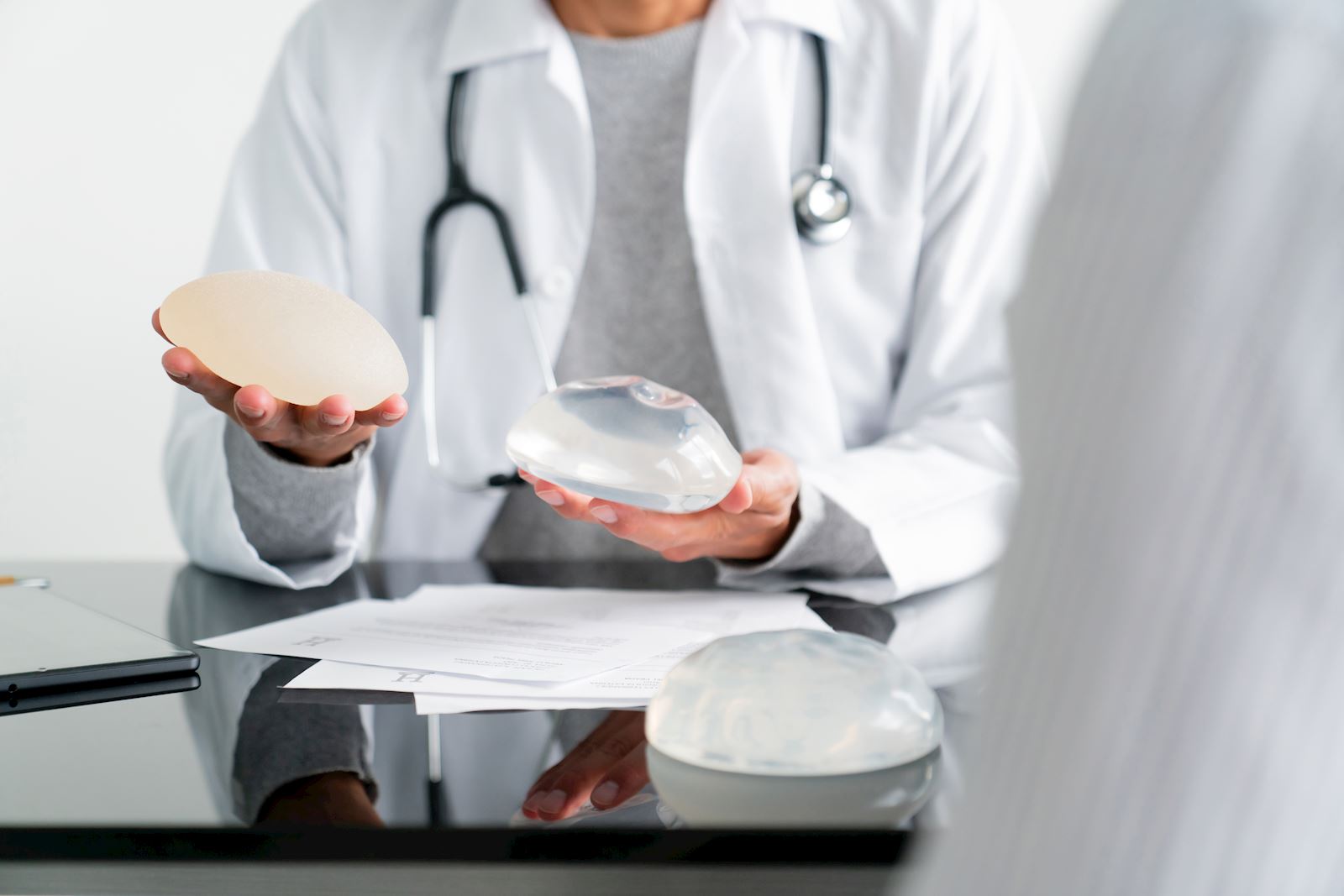
Deciding to move forward with breast augmentation is an exciting step – but it often comes with a lot of questions. One of the most important decisions you’ll make is choosing the right implant size and type for your body.
While it’s easy to focus on cup size or inspiration photos, the best results come from a more personalized approach.
“The goal isn’t to copy someone else’s results,” says Dr. Maria Steil, board-certified plastic surgeon at The Iowa Clinic. “It’s to choose implants that complement your body and help you feel confident in your own shape.”
Understanding your options can help you feel more confident going into your consultation – and more satisfied with your results long-term.
What is a Breast Augmentation (Implant)?
Breast augmentation is a surgical procedure designed to enhance the size, shape, and symmetry of the breasts using implants.
During the procedure, a breast implant – either saline or silicone – is placed to create a fuller, more balanced appearance. Implants come in a variety of sizes, shapes, and profiles, allowing the procedure to be tailored to each patient’s anatomy and goals.
Types of Breast Implants
There are two primary types of breast implants: silicone and saline. Both are FDA-approved and widely used, but each offers unique benefits.
Silicone Implants
Silicone implants are filled with a cohesive gel designed to mimic the feel of natural breast tissue.
Pros:
- Softer, more natural feel
- More natural appearance, especially in thinner patients
- Less visible rippling
Cons:
- Requires a slightly larger incision
- Ruptures may be “silent” and require imaging to detect
Saline Implants
Saline implants are filled with sterile salt water after placement.
Pros:
- Smaller incision since they are filled after insertion
- Adjustable during surgery for improve symmetry
- Rupture is immediately noticeable and harmlessly absorbed by the body
Cons:
- Firmer feel
- Higher chance of visible rippling, especially in patients with less natural tissue
“Both options are safe and effective,” says Dr. Steil. “It really comes down to your anatomy and what kind of look and feel you prefer.”
Cup Size vs cc Volume
One of the most common misconceptions is that breast implants are selected based on cup size. In reality, implants are measured in cubic centimeters (cc), which reflects volume – not bra size.
Because bra sizing varies widely between brands, it’s not a reliable way to plan surgery.
As a general guideline:
- 150-200 cc ˜ one cup size increase
- Most patients choose implants between 300-500 cc for balanced results
Implant Volume (cc) | Estimated Cup Size Increase |
| 250-300 cc | A to B |
| 300-350 cc | A to C |
| 370-430 cc | A to D |
| 350-400 cc | B to D |
| 400-450 cc | B to DD |
| 450-550 cc | C to E |
If you’re trying to visualize implant size at home, the rice test is a simple and helpful starting point.
This involves placing measured cups of rice (or water) into a bag and placing it inside a bra to simulate different implants. For example, 1 cup of rice is roughly equal to about 240 cc.
While this method isn’t exact, it can give you a better sense of how different sizes may look and feel on your frame.
Lifestyle Considerations
Your daily lifestyle plays an important role in selecting the right implant size and type.
Patients who are highly active or participate in regular exercise may prefer a more moderate implant size for comfort and mobility. Larger implants, while appealing visually, can feel heavier and may impact posture or activity over time.
Other factors to consider include:
- How you want clothing to fit
- Long-term plans such as pregnancy or weight changes
- Your overall comfort and confidence
“We always think about how implants will fit into your life – not just how they look,” Dr. Steil explains.
Implant Profiles
In addition to size and type, implant profile significantly impacts your final look. The profile refers to how far the implant projects outward from the chest.
Common profile options include:
- Low profile: wider base, subtle projection
- Moderate profile: balanced, natural appearance
- High profile: narrower base with more projection and fullness
Two implants with the same cc volume can look very different depending on the profile.
Finding the Right Fit for You
Choosing the right breast implant size and type is not a one-size-fits-all decision. It’s a personalized process that considers your anatomy, goals and lifestyle.
During your consultation, your surgeon will:
- Take detailed measurements
- Discuss your aesthetic goals
- Use implant sizers or imaging to help visualize results
- Recommend options that create balance and proportion
If you’re considering breast augmentation, the next step is to meet with a board-certified plastic surgeon who can guide you through your options and develop a personalized plan.
To learn more or schedule a consultation, call 515.875.9744 or schedule an appointment online.
Frequently Asked Questions
Yes. In cases where there is natural your surgeon may recommend using slightly different implant sizes to create a more balanced appearance.
Silicone implants are often considered the most natural-feeling option because they closely mimic the texture of natural breast tissue. They are also less likely to show visible rippling, especially in patients with less existing tissue.
However, saline implants remain a safe and effective option, and some patients prefer them for their adjustability and the fact that ruptures are immediately noticeable.
Not necessarily. Larger implants don’t always create better results — especially if they are not proportionate to your body.
Choosing an implant that fits your frame is key to achieving a natural, balanced appearance and long-term comfort.
Breast implants are long-lasting but not considered lifetime devices. Many patients enjoy their results for 10–20 years or more, though replacement may be needed over time due to changes in the body or personal preference.
Regular follow-up and monitoring are important, especially for silicone implants.

MariaSteil , MD
Maria Steil, MD brings her passion for patient-focused care and surgical artistry to The Iowa Clinic Plastic Surgery department. With a background in both private practice and academic medicine, Dr. Steil felt that The Iowa Clinic was the best place to focus on providing exceptional patient care within a physician-led organization. She is board certified by the American Board of Plastic Surgery.
As a plastic surgeon, Dr. Steil enjoys the opportunity to work on every part of the body with every type of patient. From intricate facial reconstructions to body enhancements, she finds deep reward in helping patients achieve goals they have long hoped for.
An Iowa native, Dr. Steil attended the University of Iowa for medical school and later completed her residency at The University of Texas Medical Branch. During residency, she completed a rotation at MD Anderson Cancer Center, where she focused on reconstructive surgery. She also trained at Shriners Burn Institute, gaining experience in acute burns and pediatric burn reconstruction.
Outside of work, Dr. Steil enjoys spending time with family, baking, crafting, painting and sewing. In addition to plastic surgery, she has a strong interest in facial prosthetics to help patients who have experienced loss due to traumatic injury or cancer.