

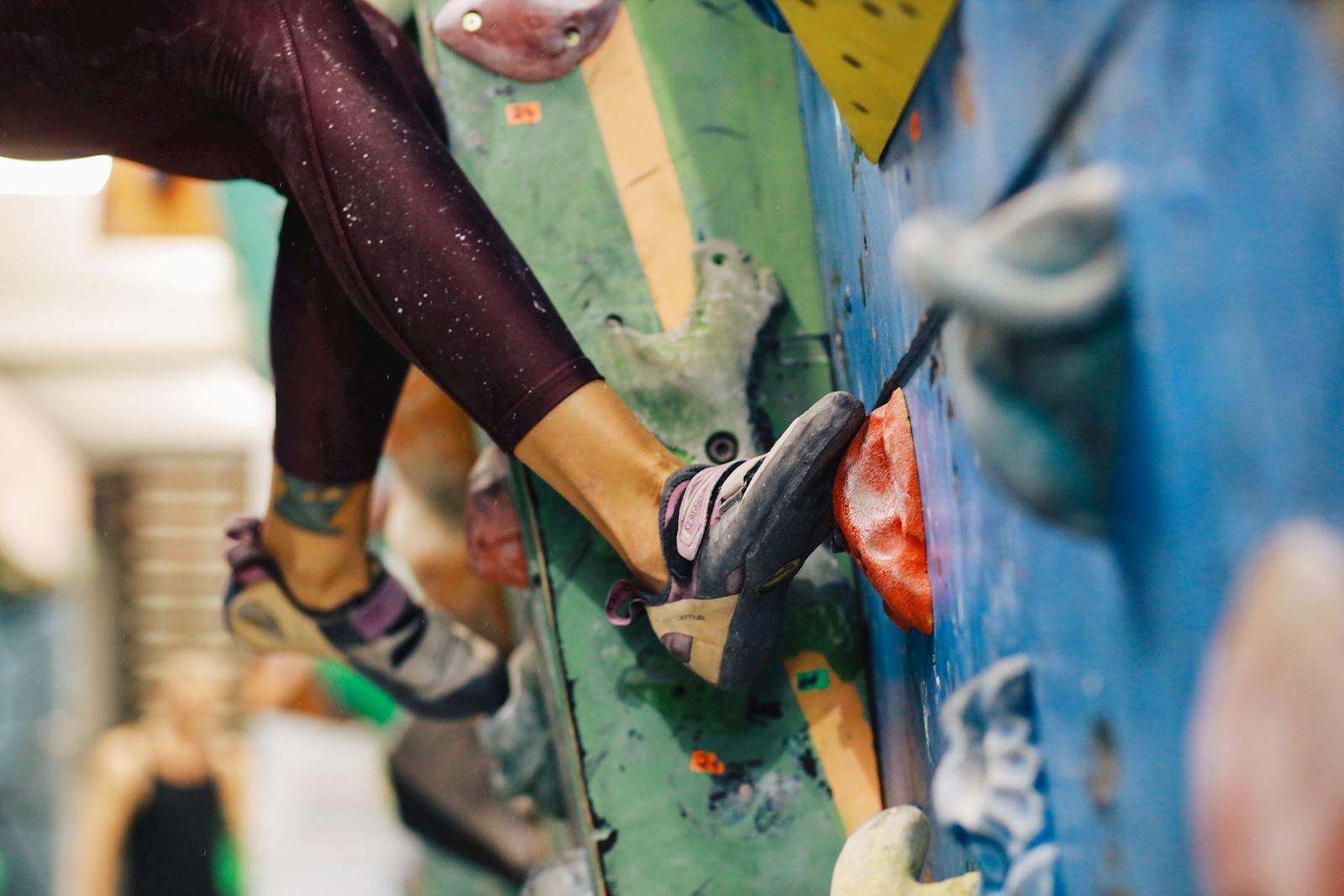
Whether you’re climbing indoors at the gym or tackling outdoor routes, strong and stable feet are essential for performance. Climbers rely heavily on precise foot placement, balance, and body positioning – which means the toes, ankles, and surrounding muscles do a lot more work than people realize.
While upper body strength often gets the spotlight in climbing training, maintaining healthy feet and ankles can make a major difference in both performance and injury prevention.
Why Foot & Ankle Health Matters in Climbing
Climbing requires a unique combination of strength, flexibility, and stability. Small adjustments in foot placement help climbers maintain balance, generate upward momentum, and reduce strain on the arms and shoulders
When the feet and ankles lack mobility or strength, climbers may compensate with other parts of the body — increasing the risk of fatigue or injury.
“Efficient footwork is one of the biggest performance advantages climbers can develop,” says Dr. Alivia Passet, foot and ankle surgeon at The Iowa Clinic. “If the ankle doesn’t move well or the toes can’t generate enough pressure, climbers often overcompensate with their arms and shoulders, which leads to quicker fatigue.”
Toe Strength for Better Foot Placement
Strong toes help climbers maintain grip on small footholds and maintain tension while standing on narrow edges.
Because climbing shoes are typically tight and rigid, the muscles in the toes may not get as much natural movement as they would in everyday footwear. Over time, this can contribute to weakness or stiffness.
Exercises that can help build toe strength include:
- Towel scrunches or marble pickups
- Toe spreading exercises
- Barefoot balance drills
“Your toes play a surprisingly large role in stability,” says Dr. Passet. “Strengthening the small muscles in the foot can improve precision on footholds and help distribute pressure more evenly across the foot.”
Ankle Mobility for Smearing and Positioning
Ankle mobility plays a key role in many climbing techniques, especially smearing — when climbers rely on friction between the shoe and the rock or wall.
Limited ankle mobility can make it harder to maintain stable body positioning or reach certain footholds.
Regular mobility work can help climbers improve flexibility and reduce stress on the surrounding joints. Some helpful exercises include:
- Ankle circles
- Calf stretches
- Deep squat holds
Common Foot and Ankle Injuries in Climbers
Climbers can experience several foot and ankle conditions due to repetitive stress, tight footwear, and dynamic movements.
Some of the most common injuries include:
- Ankle sprains. Landing awkwardly after a fall or jump can stretch or tear the ligaments that support the ankle.
- Turf toe. This injury occurs when the big toe bends too far upward, straining the joint and surrounding tissues.
- Achilles tendon irritation. Overuse or tight calf muscles can place extra strain on the Achilles tendon.
- Stress fractures. Repeated impact or overtraining may cause small cracks in the bones of the foot.
“Climbers should pay attention to pain that doesn’t improve with rest,” says Dr. Passet. “Persistent swelling, instability, or pain during weight-bearing activity can indicate an injury that should be evaluated.”
Protect Your Feet and Ankles While Climbing
Maintaining foot and ankle health doesn’t require a major overhaul to your training routine. Small adjustments can help keep you climbing safely and comfortably.
Consider these tips:
- Warm up your feet and ankles before climbing
- Incorporate toe and ankle strengthening exercises into your routine
- Stretch calves and ankles after climbing sessions
- Avoid wearing tight climbing shoes for extended periods off the wall
- Pay attention to pain that persists or worsens with activity
If you experience ongoing foot or ankle pain, swelling, instability, or difficulty bearing weight, our team of foot and ankle specialists can help identify underlying injuries and create a treatment plan that gets you back to climbing safely.
Schedule an appointment by calling 515.875.9876 to get back to climbing with strength, stability, and confidence.

AliviaPasset , DPM
Alivia Passet, DPM joined The Iowa Clinic Podiatry department stemming from her admiration for its reputation for exceptional providers and patient care. Dr. Passet values the close relationships amongst TIC providers, which provides the opportunity to streamline patient care.
After obtaining her undergraduate degree in Athletic Training, Dr. Passet completed her medical degree at Des Moines University and later completed her residency training at the Iowa Methodist Podiatric Medicine and Surgery program. Her background in Athletic Training, combined with personal experiences with athletic injuries, fuels her special interest in treating athletes and athletic injuries. Helping patients to return to a pain-free, active lifestyle is something Dr. Passet finds most rewarding about her practice.
An Iowa native, Dr. Passet is thrilled to serve the people of central Iowa. An enthusiastic fan of the Iowa Hawkeyes and Cincinnati Bengals, she is an avid sports-watcher and dedicated fan. In her free time, Dr. Passet enjoys spending time with friends and family, cooking and being outdoors – whether golfing, biking, or running.