

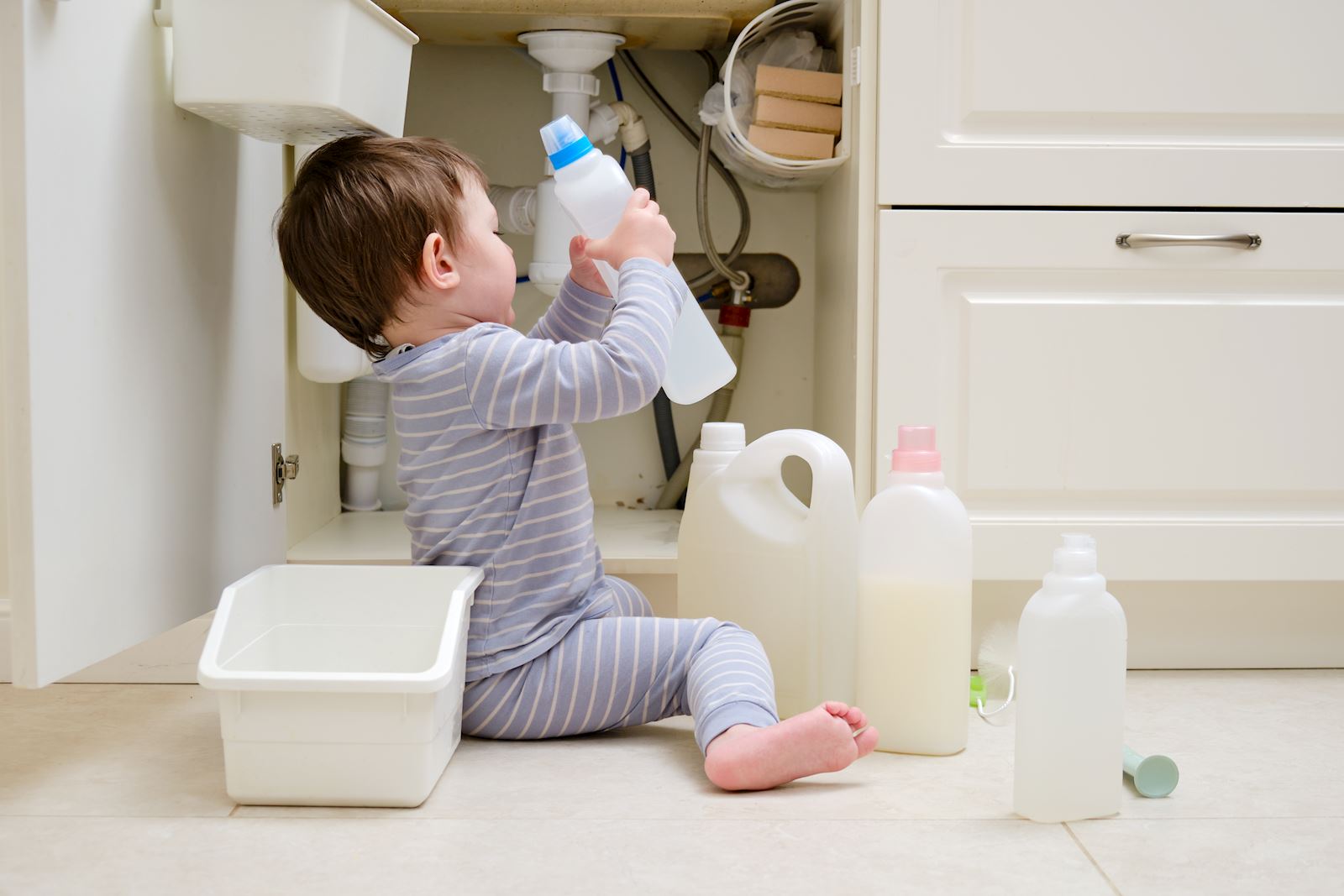
Many everyday household items can be dangerous for young children. From medications and vitamins to cleaning products and personal care items, substances adults use safely every day can pose serious risks when accessed by curious kids.
Children explore the world by touching, tasting, and putting objects in their mouths. Because of this natural curiosity, accidental poison exposures most often happen at home and frequently involve household products.
“Children are naturally curious, especially toddlers,” says Dr. Shauna Baker, pediatrician at The Iowa Clinic. “That curiosity is completely normal, but it means parents need to be especially mindful about what’s within reach.”
Taking steps to poison-proof your home can significantly reduce the risk of accidental exposure.
Common Household Items That Can Poison Children
Parents are often surprised to learn that some of the most common poisoning risks are everyday items already in their home. Recognizing these hazards is the first step toward prevention.
Medication and Vitamins
Prescription medications, over-the-counter drugs, and vitamins are among the most common causes of accidental poisoning in children. Many medications are colorful, chewable, or flavored, which can make them look like candy to young kids. For this reason, you should avoid referring to medication as “candy”.
“Medications are one of the most frequent sources of accidental poisoning we see in children,” Dr. Baker says. “Even a small amount of the wrong medication can cause serious problems.”
Common medication-related poisoning risks include:
- Prescription medications such as pain relievers, blood pressure medications, and antidepressants
- Over-the-counter medications like acetaminophen, ibuprofen, cold medicines, and sleep aids
- Vitamins and supplements, especially iron supplements, which can be dangerous for children
- Gummies or chewable vitamins that look like candy
- Medications stored in purses, backpacks, or nightstands
- Pill organizers that are easy for children to open
Cleaning Products
Household cleaning supplies contain strong chemicals that can cause burns, poisoning, or breathing problems if swallowed or inhaled.
Laundry detergent pods are particularly dangerous because their bright colors and soft texture can make them look like toys or candy.
Common household cleaning hazards include:
- Laundry detergent pods or packets
- Bleach and disinfectants
- Dishwasher detergent
- Drain cleaners
- Toilet bowl cleaners
- Oven cleaners
- Mold and mildew removers
- Floor and carpet cleaners
- All-purpose sprays and wipes
Personal Care and Beauty Products
Many personal care items contain alcohol, chemicals, or essential oils that can be harmful if swallowed by children.
“Parents don’t always realize that everyday personal care products can be toxic,” Dr. Baker explains. “But items like mouthwash or essential oils can make children very sick if ingested.”
Common personal care hazards include:
- Mouthwash (often contains alcohol)
- Nail polish remover or acetone
- Perfumes and colognes
- Essential oils
- Hair dyes or chemical hair treatments
- Sunscreen or skincare products
- Hand sanitizer
- Cosmetic products like foundation, lipstick, and mascara
Even small amounts can cause symptoms like nausea, vomiting, dizziness, or drowsiness in young children.
Other Hidden Poison Hazards
- Small button batteries found in toys, watches, and remote controls can cause severe internal injuries if swallowed
- Nicotine products, including vape liquids and nicotine pouches
- Cannabis edibles that may look like candy or baked goods
- Alcohol, including mixed drinks left within reach
- Certain houseplants may be toxic if chewed
- Automotive products like antifreeze, windshield fluid, and gasoline
- Pesticides and lawn chemicals
How to Poison-Proof Your Home
While it’s impossible to eliminate every risk, a few simple precautions can significantly reduce the chances of accidental poisoning.
Store Hazardous Items Safely
Keep medications, chemicals, and cleaning products:
- Locked in cabinets
- Stored high out of reach
- Out of sight whenever possible
“Parents sometimes assume that something on a high shelf is safe,” Dr. Baker says. “But children are surprisingly good climbers.”
Use Child-Resistant Packaging
Child-resistant packaging can slow children down but does not replace supervision.
- Close lids tightly after every use
- Never leave containers open
- Store items immediately after using them
Keep Products in Their Original Containers
Original packaging provides important safety information and helps prevent confusion.
Avoid:
- Transferring chemicals into drink bottles or food containers
- Storing medications in unlabeled containers
- Mixing cleaning products together
Teach Children About Safety
As children grow, parents can begin teaching them about safety around medications and household products.
For example:
- Explain that medicine should only be given by a parent or caregiver
- Teach children never to taste unknown substances
- Encourage kids to ask before touching unfamiliar items
- Avoid taking medicine in front of children who may try to intimidate you
“Poison prevention is really about awareness,” Dr. Baker says. “A few simple changes in how we store medications and household products can make a big difference in protecting children.”
What to Do If a Child is Exposed to Poison
Even with precautions, accidents can still happen. Knowing what to do in an emergency can help parents respond quickly and safely.
If you think your child may have swallowed or been exposed to something poisonous, call Poison Control immediately at 1-800-222-1222. Poison control specialists are available 24 hours a day and can provide guidance on what to do next.
Taking time to evaluate potential risks in your home today can help keep your family safer tomorrow.

ShaunaBaker , MD
Shauna Baker, MD joined The Iowa Clinic Pediatrics department because of the commitment to compassionate patient care, and to bring her practice to her home state of Iowa. For Dr. Baker, forming long term relationships with a child and their family, as well as helping them grow from newborn to young adult is what she enjoys most about pediatrics.
A small-town Iowa native, Dr. Baker practiced in a small practice in Grand Rapids, MI for 25 years prior to returning to her home state. She currently resides in Des Moines with her husband and two kids, where she enjoys camping, cooking, and attending her son’s activities. If she was not a provider, she might have been a pastry chef.