
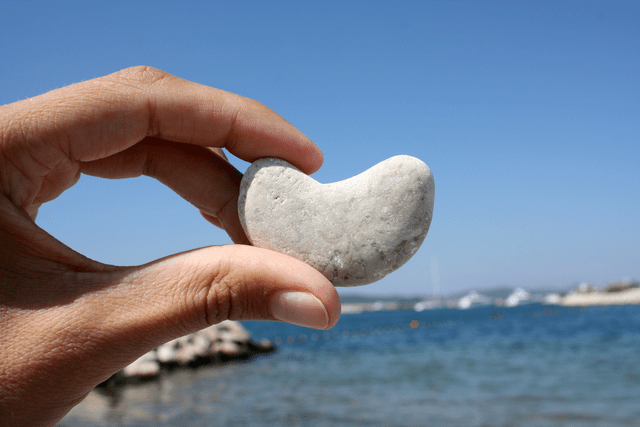
Spend some time outdoors and you’re bound to get a rock in your shoe. Every single step sends pain through the sole of your foot. You can’t walk again until you shake that little thing out of your shoe, often to find that it’s much smaller than the pain would make you think.
Now, imagine one of those pebbles being lodged in your kidneys or slowly moving through your urinary tract. There’s no way to shake it loose like a rock in your shoe. But there are a number of ways to get rid of it to get relief.
 1. Pass the kidney stone.
By the time kidney stone pain begins, the stone is usually already on the move. It may have been sitting quietly in the kidney for years before finally traveling into the ureter—the tube that connects the kidney to the bladder—where it causes blockage and intense pain. From there, the stone may be able to pass on its own.
The likelihood of passing a kidney stone depends largely on its size, though it isn’t completely predictable. Smaller stones are much more likely to pass without intervention, while larger stones typically require treatment.
- Stones 4 millimeters or smaller have a high likelihood of passing naturally, though it can take several weeks.
- Stones 6 millimeters or larger are unlikely to pass on their own.
- Stones in the 4–6 millimeter range fall into a gray area, with just over half passing naturally within about 45 days.
Even small stones can cause significant pain. If over-the-counter medications like acetaminophen or ibuprofen don’t adequately control symptoms, it may be time to consider additional treatment options.
2. Pulverize the kidney stone into tiny, passable pieces.
Lithotripsy is a procedure that breaks kidney stones into smaller fragments that are easier to pass or remove. One commonly used approach is extracorporeal shock wave lithotripsy (ESWL), which is often used for stones located in the kidney or upper ureter.
ESWL is completely noninvasive. Imaging is used to locate the stone, and focused shock waves are directed at it to break it into smaller pieces. This approach is typically effective for small to medium-sized stones in the kidney.
ESWL has a high success rate for breaking up stones in a single treatment. Because there are no incisions, there is little to no recovery time, and most patients experience minimal discomfort while passing the fragments.
3. Break up the kidney stone and pull out the pieces.
Another treatment option involves using a small scope passed through the urethra, bladder, and into the ureter. Once the stone is located, a laser is used to break it into smaller pieces, which are then removed.
In some cases, stones can be removed intact with the scope alone. When size, shape, or location prevents that, laser lithotripsy is used first. A temporary stent is often placed afterward to help the kidney drain while swelling subsides.
Ureteroscopy is most commonly used when a stone has already moved from the kidney into the ureter. It is minimally invasive, requires no incisions, and typically allows for recovery in less than a week.
One advantage of ureteroscopy is that the stone is removed during the procedure, eliminating the need to wait for it to pass naturally.
4. Undergo kidney stone removal surgery.
Surgery is the least common option and is reserved for large or complex stones that cannot be treated with other methods.
One such procedure is percutaneous nephrolithotripsy, in which a small incision is made in the back to access the kidney directly. A scope is inserted, and large stones are broken up and removed.
This approach is usually reserved for stones 2 centimeters or larger—about the size of a marble—or for stones with unusual shapes that prevent passage. It is the most invasive kidney stone treatment and may require several weeks of recovery.
5. Prevent kidney stones before they form.
The best—and least painful—way to deal with kidney stones is to prevent them altogether. Once you’ve had one kidney stone, your risk of developing another increases. In many cases, stone formation is linked to metabolic factors, such as excess calcium or low citrate levels in the urine.
Kidney stones form when waste minerals become too concentrated and crystallize. While medications can help in some cases, simple lifestyle changes are often the first and most effective line of defense:
- Drink plenty of fluids. Aim to produce more than two liters of urine per day. This often requires drinking more than the standard “eight glasses” of water, especially if you sweat frequently.
- Add citrus to your diet. Citrate helps prevent calcium stones from forming. Lemon water, real lemonade, or adding lemon juice to meals can help increase citrate levels.
- Limit sodium intake. Excess salt increases calcium in the urine. Eating fresh foods, cooking at home, and reducing restaurant meals can help keep sodium levels in check.
- Moderate high-oxalate foods. Foods like spinach, rhubarb, beets, sweet potatoes, peanuts, and almonds are healthy but high in oxalates. Limiting—not eliminating—these foods may reduce stone risk.
- Reduce animal protein. While most kidney stones are calcium-based, uric acid stones are linked to animal protein. Keep portions of meat, eggs, and seafood to about the size of a deck of cards.
Most kidney stones cannot be dissolved once they form, so dietary changes are unlikely to eliminate an existing stone. However, these strategies help reduce mineral concentration in the urine and prevent stones from growing or recurring.
If you’ve passed a kidney stone before, others may already be forming without symptoms. Staying hydrated, managing your diet, and watching for early warning signs can help you avoid future episodes of kidney stone pain.