
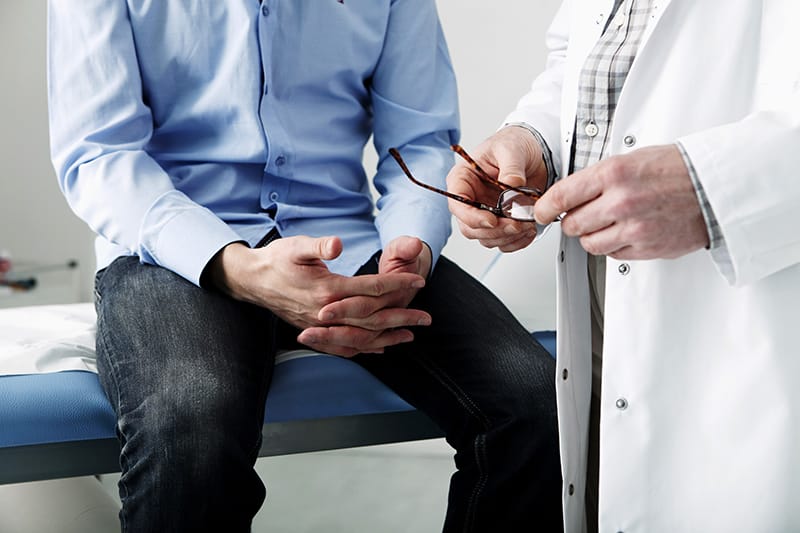
For most men, the idea of a vasectomy brings anxiety. They’ve spent years protecting their private parts, so the thought of going under the knife down there makes them nervous.
The surgery itself is quick. Once you overcome the nerves surrounding the procedure, you’ll find that the recovery time is too.
 The average vasectomy recovery time is less than a week.
Most men are surprised by how quickly they’re able to return to normal routines after a vasectomy. Many patients are able to return to work the next day, especially if their job isn’t physically demanding. Fridays are a popular choice for scheduling the procedure, allowing time to rest over the weekend and be ready for the workweek.
While that’s a fast turnaround, it’s important to remember that a vasectomy is still surgery. Giving your body time to heal is essential for a smooth recovery.
Although most daily activities resume quickly, it can take several weeks before the area looks and feels completely back to normal. Following your urologist’s instructions helps ensure you return to full activity—sexual and otherwise—as safely and comfortably as possible.
Vasectomy Recovery Tips
Like with any surgery, the first few days post-vasectomy are the most important. This is the time where you’re still feeling the effects. Take it easy and follow these tips to heal up after your procedure:
- Get some rest. Keep your activity to a minimum for at least the first two days, then resume activities as much as you can tolerate them. Avoid doing anything strenuous, like heavy lifting.
- Kick your feet up. Relax in a recliner or lie down with your feet elevated. Elevation promotes circulation, which leads to healing.
- Ice your area. This is where the frozen peas come in. You want something cold that you can mold around your testicles — not a heavy, blocky ice pack that rests on top.
- Practice good hygiene. Wait until the day after your vasectomy to shower to give the wounds time to heal. After that, keep your groin area clean to prevent infection. But stick to the shower — stay out of the bath tub for three to four days.
- Wear comfortable clothing. Dr. Rosenberg says supportive or tight underwear like compression shorts are helpful for comfort the first couple of days after a vasectomy. As the area heals, loose-fitting clothing like sweatpants are best until you feel comfortable in tighter clothes again.
- Take acetaminophen or ibuprofen. You may have a little discomfort in the first 72 hours after vasectomy. Everybody’s pain tolerance is different, but most people get by with Tylenol or Advil until the discomfort goes away.
By day three, you’re on your way to healing and ready to handle nearly all normal activities. You still want to avoid exerting yourself too much, either in exercise or intercourse, until you hit the one week mark — to avoid complications. Rushing back to activities too soon and ignoring your physician’s instructions are the most common reasons men suffer setbacks.
There are a few side effects of having a vasectomy, but serious issues are rare.
Most concerns after a vasectomy aren’t about the procedure itself, but about how things look and feel during recovery. Temporary bruising, swelling, dissolving stitches, or a small amount of drainage can occur and are typically a normal part of healing.
Discomfort is usually mild and short-lived, and chronic pain after vasectomy is extremely rare. There is also no proven connection between vasectomy and changes in sexual desire, sexual performance, hormone levels, heart disease, or prostate cancer.
The most common complication reported is bruising, which improves with time and rest. In rare cases, the incision sites can become infected. Keeping the area clean significantly lowers this risk, and infections—when they do occur—are usually easily treated with antibiotics.
Skipping your follow-up appointment after surgery is a huge risk.
Vasectomy is one of the most effective forms of permanent birth control, with a success rate of over 99% — but only if follow-up testing is completed.
After a vasectomy, you are not immediately sterile. Sperm can remain in the reproductive tract beyond the surgical site for several weeks or months. That’s why a semen analysis about three months after the procedure is critical.
This follow-up typically involves dropping off a semen sample using a container provided at the time of your procedure. The sample is examined under a microscope to confirm that no sperm are present. Until that confirmation, another form of birth control should continue to be used.
In very rare cases, the vas deferens can reconnect during healing — a process known as recanalization. This is extremely uncommon, but follow-up testing ensures the procedure was successful.
Most men do not experience complications and only need reassurance that what they’re noticing during recovery is normal. If you ever have questions or concerns, contacting the Urology department is encouraged.